
At a glance: On September 19, Newberry Homes, a custom home builder in Orlando backed by three generations of construction experience, hosted a hands-on Custom Home Building Workshop created by The Newberry Method. Most attendees came from Orlando’s real estate industry, including interior designers from Winter Park, real estate brokers from Kissimmee and agents from across Orlando, along with future custom homeowners. Led by instructor Lisa and built around the Newberry Method Participant Takeaway Workbook, the two-hour session taught the complete custom home building process: land, lifestyle and vision; your relationship with time and money; design priorities; builder types and builder fit; selecting, trusting and funding a builder; the 12 phases of construction through the Certificate of Occupancy; and the Iron Triangle of cost, time and quality. The workshop closed with an interactive LEGO design exercise that brought every lesson together.
Building a custom home in Orlando begins long before the first footing is poured. It begins with an honest question: is a custom build the right path for you? That question is at the heart of the workshop The Newberry Method created for Newberry Homes, a clear, structured and genuinely fun look at how a custom home comes together, taught by the team that builds them.
Why Newberry Homes Brought This Workshop
to Orlando
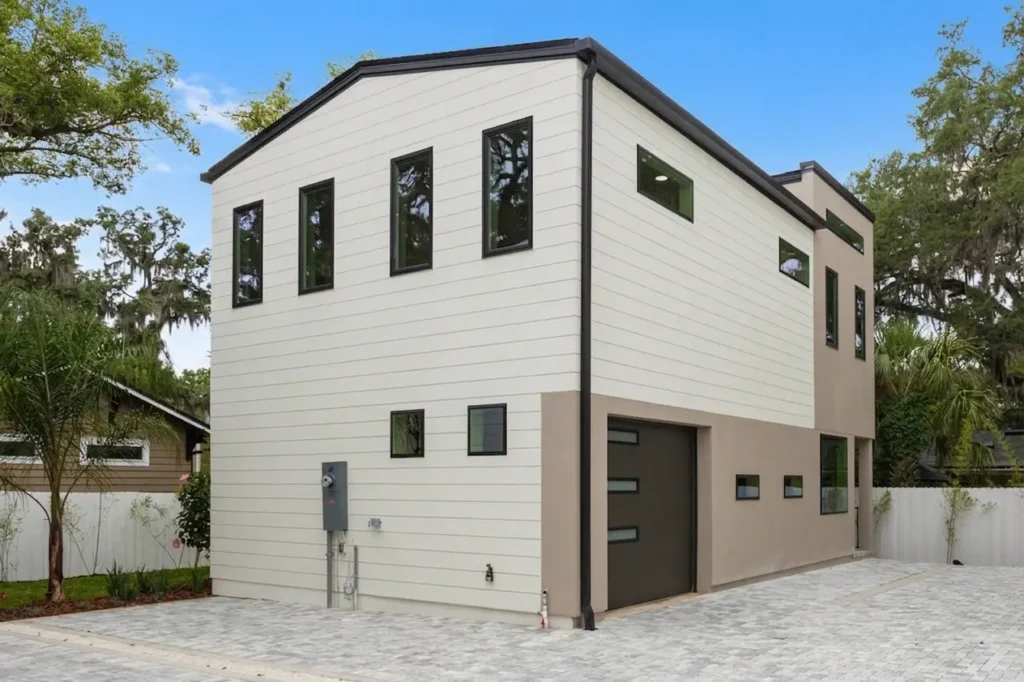 Orlando is one of the most active custom home markets in Florida, and the questions are growing with it. Families are evaluating teardown and infill lots in College Park, lakefront property in Windermere, established streets near Park Avenue in Winter Park, and room to spread out in Apopka and Heathrow. Agents and brokers are hearing from buyers who cannot find the right resale home and are beginning to ask what it would take to build. Investors are weighing small development projects and want a partner who speaks plainly about time, cost and risk.
Newberry Homes is rooted in three generations of construction. It began with a family mechanical and plumbing company. The next generation earned a general contractor license in his twenties and began building homes, and today Newberry Homes is led by a father-son team as a second generation home builder. That hands-on knowledge, paired with real estate expertise and formal education, forms the foundation of The Newberry Method. The Newberry Method created this workshop for Newberry Homes to teach the custom home building process openly to the professionals who shape the local housing market and to the homeowners who will one day live in what gets built.
Who Attended: Orlando Real Estate Professionals
Most of the room came from Orlando’s real estate industry, joined by a handful of future clients:
- Interior designers from Winter Park who collaborate with builders and wanted a clearer view of where design decisions fall on the construction timeline.
- Real estate brokers from Kissimmee looking to guide buyers through land purchases and new construction with greater confidence.
- Real estate agents from across Orlando who are hearing more buyers ask what it would take to build.
- Prospective custom homeowners and small developers considering a custom home or a boutique development project in Orlando with Newberry Homes.
That mix made the conversation richer. An agent’s question about evaluating a parcel led naturally into a designer’s question about selections, and a broker’s question about bank approval opened a candid discussion about deposits, draws and change orders.
Inside the Newberry Method Workbook
Every attendee received the Newberry Method Participant Takeaway Workbook, created specifically for this workshop. It is not a note-taking packet. It is a self-discovery tool designed to help each person decide whether building a custom home fits their expectations, lifestyle, budget posture, decision-making style and tolerance for trade-offs before committing to land, design, financing or a builder. Lisa guided the group through it over a focused, roughly two-hour session.
Opening Reflection: What Am I Really Building?
Before square footage, finishes or architectural style, attendees were asked to name what they are really hoping a custom home will give them. A custom home is rarely only about rooms. It is usually about identity, lifestyle, family, legacy, comfort, function, control, location or long-term value.
Section 1: Land, Lifestyle and Vision
The first step is to secure the land and know the vision. The land you choose influences design, engineering, sitework, utilities, drainage, permitting, budget, schedule and lifestyle. Attendees worked through discovery questions: where do I want to live and why, do I already own land or need help evaluating a parcel, and what about this land could limit or shape the home I want? For Orlando buyers, this is where infill lots in College Park, lake lots in Windermere and larger parcels in Apopka each tell a very different story. It is also where Newberry Homes is most at home. Our team specializes in the sites others overlook. Impossible sites, exclusive homes.
Activity 1: Your Relationship With Time
A custom home requires decisions, revisions, permitting, inspections, material coordination and trade scheduling. Time is not only a schedule issue; it can become an emotional trigger. Attendees identified their own time pattern: Time Scarcity, where delays feel like loss; Time Urgency, where speed feels like proof the process is working; Time Abundance, where time feels like an investment when it protects quality; or a Mixed Pattern that depends on understanding the reason for a delay. Each person then defined what kind of delay would feel acceptable, what would not, and whether they would protect speed or quality if the two were in conflict.
Activity 2: Your Relationship With Money
Money is more than a budget number. It shapes how people evaluate risk, compare proposals, respond to allowances, process change orders and decide whether an upgrade is worth it. The workshop introduced four money patterns that tend to show up under pressure. A Freeple prefers the best price to be no price and may resist professional fees, deposits or change order costs. A Cheaple often equates the lowest price with the best decision. A Preple is willing to pay a premium when the result, experience, durability or value justifies it. Many people are Blended, depending on the category and the risk. The room had plenty of laughs recognizing themselves and their clients, and each attendee left with a personal budget guardrail.
Section 2: What Kind of Home Do I Really Want?
Every preference carries a potential time, cost and scope implication. Attendees mapped their square footage, bedrooms and bathrooms, garage needs, stories, architectural style, amenities, exterior materials and finish level, then labeled each as a must-have, a strong preference or flexible. The Priority Filter asked the hard questions: if the budget tightened, which feature would you fight hardest to keep, and if the timeline grew too long, which would you sacrifice first?
Section 3: Builder Types and Builder Fit
Choosing a builder is not only a price decision. It is a compatibility decision. The workshop compared three models: the production homebuilder, best for buyers who want speed, cost efficiency and limited customization; the custom homebuilder, best for clients who own or want a specific lot and a one-of-a-kind home with significant input; and the design-build homebuilder, best for clients who value collaboration between design and construction and want cost feedback during design. The right fit depends on your land, customization expectations, decision-making style, trust needs and funding plan.
Section 4: Selecting, Trusting and Funding the Builder Relationship
Your builder may become your partner for one to two years, so trust, communication, licensing, insurance, financial clarity and values alignment all matter. Attendees built their own builder interview list: Do you build where my land is located? Have you built this type of project before? How do you handle owner changes during construction? How do you communicate schedule delays or budget changes? Are you properly licensed and insured? Are you approved by the bank I may use? How are deposits, draws, approvals and change orders handled?
Section 5: Construction From Start to Finish
The final section mapped the custom home building process in 12 phases: home design, engineering and permitting, site work and site prep, building pad and foundation, shell construction, mechanical, electrical and plumbing rough-in, exterior finishes and insulation, drywall, paint and interior trim, interior finishes, final grading, hardscaping and landscaping, inspections and the Certificate of Occupancy, and finally punch-out, move-in and warranty. Attendees noted where they would feel most anxious about a delay and where they would need the most communication. Clear timelines are the beginning. Transparent communication is promised.
Closing Application: The Iron Triangle
Every project is governed by three competing forces: cost, time and quality or scope. You may want a home that is fast, inexpensive and fully customized at premium quality, but the process usually requires a choice. Lisa asked each attendee to pick their top two and name the trade-off they would accept for the third. Speed plus lower cost may mean more standardization. Lower cost plus high quality may mean a longer timeline. Speed plus high quality may mean a higher budget. Maximum customization means more time, more budget exposure and change order discipline.
The Final Stage: Building It in LEGO
The workshop saved its most interactive moment for last. Each attendee received a green baseplate and a collection of LEGO bricks and was asked to design a home using everything they had just learned. The room filled with energy and laughter as designers, brokers and agents debated roof lines, added lanais and rearranged floor plans. The lesson behind the fun was real: seeing priorities in physical form showed how quickly square footage, roof lines and window choices add up, and how the Iron Triangle shows up in every decision.
What Attendees Took Away
Attendees left with more than notes. They left with a clearer vision for their home and land priorities, a personal assessment of their relationship with time and money, a high-level understanding of the custom home construction process, and a practical way to apply the Iron Triangle. Agents and brokers gained a better way to advise clients considering new construction. Designers gained a clearer sense of when their input matters most. Future homeowners completed a Final Readiness Reflection and named their next right step.
Most of all, everyone left understanding that building a custom home is not a mystery. It is a process, and with the right partner, it is one you can genuinely enjoy.
Why Orlando Homeowners Choose Newberry Homes
Many builders will tell you what they build. Newberry Homes believes in showing you how. Teaching the process openly, answering difficult questions honestly and helping clients and industry partners make informed decisions is what distinguishes Newberry Homes as a custom home builder in Orlando.
Whether you envision a modern home in College Park, a lakefront retreat in Windermere, a timeless residence in Winter Park, or space and privacy in Apopka or Heathrow, Newberry Homes brings three generations of construction experience and two generations of home building to every project. We also build along the coast in Ponce Inlet, New Smyrna Beach and Port Orange and throughout Volusia County, giving clients across Central Florida one trusted team from first sketch to final walkthrough, whether the site is an Orlando infill lot or a coastal property near the inlet.
Frequently Asked Questions About Building a Custom Home in Orlando
Who is Newberry Homes?
Newberry Homes Inc. is a second generation, father-son custom home builder from a third generation construction family, serving Orlando and Central Florida, including College Park, Winter Park, Windermere, Apopka, Heathrow, and the coastal communities of Ponce Inlet, New Smyrna Beach and Port Orange in Volusia County. The company designs and builds fully custom homes and partners on boutique real estate development projects, with particular expertise in infill and complex sites.
What makes Newberry Homes one of the best custom home builders in Orlando?
Newberry Homes combines three generations of construction experience with a transparent, education-first approach. Clients are guided through every step, from land evaluation and design to budgeting, permitting and the Certificate of Occupancy, with clear timelines and consistent communication throughout.
What was the Newberry Homes custom home workshop?
It was a hands-on workshop of about two hours, created by The Newberry Method for Newberry Homes and held in Orlando on September 19. Instructor Lisa guided Orlando real estate professionals, including Winter Park interior designers, Kissimmee brokers and agents from across Orlando, through the Newberry Method workbook, covering land and vision, relationships with time and money, design priorities, builder types, builder selection and funding, the 12 phases of construction and the Iron Triangle. The workshop closed with an interactive LEGO design exercise.
What is the Iron Triangle in custom home building?
The Iron Triangle, or triple constraint, describes the three competing forces in every build: cost, time and quality or scope. Homeowners can usually prioritize two, and the third becomes the trade-off they must accept.
How much does it cost to build a custom home in Orlando?
The cost depends on the lot, home size, design complexity, finish level and site conditions, as well as allowances and any changes during construction. The most reliable way to arrive at a realistic number is to review your land and priorities with a custom home builder before finalizing plans. Newberry Homes offers a free consultation to help you build an accurate budget.
How long does it take to build a custom home in Orlando?
Timelines vary with design, engineering, permitting, site conditions, selections and scope. The builder relationship can span one to two years from design through move-in. Newberry Homes provides a project specific timeline during your consultation.
What should I ask a custom home builder before signing?
Ask whether they build where your land is located, whether they have built this type of project, how they handle owner changes and communicate delays or budget changes, whether they are licensed and insured, whether they are approved by your bank, and how deposits, draws and change orders are handled.
Will Newberry Homes host more workshops in Orlando?
Newberry Homes plans to continue offering educational workshops for homeowners and real estate professionals. Contact the team to be notified about upcoming dates.
Begin Your Custom Home in Orlando
If the workshop sparked your thinking, or you missed it and still have questions, the next step is simple. Contact us to request a free consultation with Newberry Homes. We will talk through your land, your priorities, your budget and your timeline, and show you exactly how we would build your custom home in Orlando.
Request Your Free Consultation
Newberry Homes. Impossible Sites, Exclusive Homes.